


How Remote Online Notarization Is Changing the Pace of Real Estate Closings

For most of the last century, closing a real estate transaction required two things: a notary, and everyone meeting in the same room. The notary’s role was simple — verify identity, witness signatures, stamp documents. But the requirement that everyone be physically present added days, sometimes weeks, to closings. Sellers had to coordinate schedules with buyers, lenders, title companies, and attorneys. Out-of-state sellers had to fly in. Elderly homeowners had to travel. Divorced couples had to be in the same room.

Then states started authorizing remote online notarization (RON) — the legal framework that allows a notary to verify identity and witness signatures over a secure video connection. Florida authorized RON in 2020. Texas, Virginia, Indiana, Michigan, and a growing list of other states followed. Today, more than 40 states permit some form of RON.
The shift sounds technical, but the practical impact on real estate transactions has been substantial. Here’s what’s changed.
Closings That Used to Take Weeks Now Take Days
The traditional closing process required physical signatures on dozens of documents: the deed, the mortgage, the affidavit of title, the closing disclosure, transfer tax declarations, lender disclosures, and more. Each had to be signed and notarized in person.
With RON, those same documents can be signed and notarized from anywhere with a stable internet connection. A seller in Florida selling a home to a buyer in California, working with a title company in Tampa, can complete the entire closing in a single 30-minute video session.
For cash buyers and real estate investors who close quickly, this matters enormously. A traditional cash close used to require 14-21 days largely because of scheduling overhead. With RON, that timeline can drop to 7 days or fewer.
Distressed Sellers Benefit Most
The seller populations most affected by slow closings are also the most vulnerable. Homeowners facing foreclosure are racing against an auction date. Inherited property owners are managing closings while grieving and often live out of state. Divorcing couples need transactions to close quickly to finalize separation. Out-of-state landlords selling a property they haven’t seen in years want minimum coordination overhead.
For these sellers, traditional closing logistics were a real burden. Flying in for a closing. Coordinating schedules with an ex-spouse. Taking time off work. RON removes most of those frictions.
Remote online notarization has become especially valuable for companies working with distressed sellers. Florida-based cash home buyer Reliably is one example of a company using RON to streamline closings involving foreclosure risk, inherited property, divorce, and repair-heavy homes. By reducing in-person scheduling requirements, sellers can often complete closing documents from home on a more flexible schedule.
Identity Verification Is Actually More Rigorous
A common concern people raise about online notarization is security: how do you know the person signing is really who they say they are?
In practice, RON identity verification is more rigorous than traditional in-person notarization. Most RON platforms require:
- Government-issued ID upload (driver’s license or passport)
- Knowledge-based authentication (questions from credit bureaus that only the real person should be able to answer)
- Biometric facial recognition matching the ID photo
- Live video session recording (typically retained for 10 years)
- Secure document signing with digital signatures that have tamper-proof audit trails
Compare that to traditional notarization — where a notary often only glances at a driver’s license and asks no further questions — and RON is meaningfully harder to defraud.
Title Insurance and Lender Acceptance
When RON was new, the question of whether title insurance underwriters and mortgage lenders would accept remotely notarized documents was a real concern. That’s largely resolved now. Most major title insurance underwriters (First American, Old Republic, Fidelity National, Stewart Title) accept RON for transactions in states where it’s authorized. Most mortgage lenders accept RON for closing documents. Some Fannie Mae and Freddie Mac sellers/servicers were initially slow to accept RON-notarized loan documents, but adoption has accelerated.
For practitioners, the practical lesson is: verify with your specific title company and lender before assuming RON will work for a particular transaction. Most will accept it. Some still have transaction-specific restrictions.
What’s Still Required In-Person
RON has expanded the universe of remotely-signable documents, but a few categories still typically require traditional in-person notarization or have state-specific restrictions:
- Wills and codicils — most states still require traditional witnessing
- Some powers of attorney — depends on state and document use
- Certain trust documents — varies by jurisdiction
- Documents going to specific government agencies — some federal agencies still require wet signatures
For real estate transactions specifically, the deed, mortgage, and closing documents are almost universally RON-eligible in authorizing states. Side documents (affidavits, disclosures, addenda) similarly. The main exception is when a transaction crosses state lines and one state hasn’t authorized RON yet — the more restrictive state’s rules apply.
The Practitioner’s Checklist
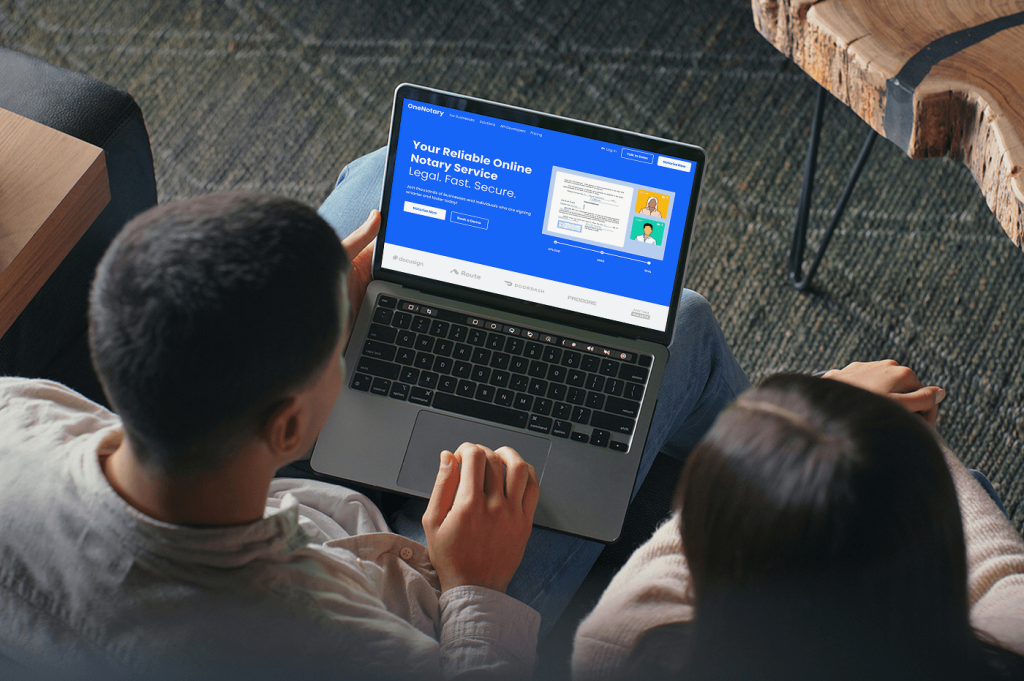
For real estate practitioners considering using RON in transactions, a few practical considerations:
- Verify state authorization. RON laws vary state by state. Some states authorize permanently, some authorized temporarily during COVID and have since codified or rolled back rules.
- Verify title underwriter acceptance. Confirm your title company’s underwriter accepts RON for the specific transaction type.
- Verify lender acceptance. Especially important if any party is using mortgage financing.
- Use a reputable platform. RON platforms vary in security, ease of use, and document handling. OneNotary is one option; others include Notarize and DocVerify.
- Confirm seller comfort. Some sellers, especially older homeowners, prefer in-person closings. Don’t force RON on someone uncomfortable with technology.
- Maintain proper records. RON sessions are recorded and audited. Make sure your title company or attorney maintains proper records of the session for the required retention period.
Looking Forward
The trend is clear: real estate transactions are becoming faster, more flexible, and more remote-friendly. RON is one piece of that larger shift. So are electronic deed recording (which most states now allow), virtual home inspections, and online property valuations.
For sellers, this means more control over how and when they sell. For buyers and investors, it means faster execution. For practitioners, it means competitive pressure to adopt the tools that make transactions easier for everyone involved.
Market expectations are shifting toward faster and more flexible transaction processes. Cash buyers, title companies, attorneys, and other real estate professionals that adopt remote-friendly workflows may be better positioned to meet growing demand for speed and convenience in modern transactions.
As digital transaction infrastructure continues to expand, remote online notarization is likely to remain an increasingly important part of the real estate closing process. For professionals across the transaction ecosystem, the focus is no longer whether remote tools will play a role, but how effectively they can be integrated into existing workflows.
Author bio
Alex Tchogorian is the founder of Reliably, a Florida real estate firm helping homeowners sell quickly when traditional listings don’t work — pre-foreclosure, divorce, inheritance, and properties needing major repairs. Reliably uses remote online notarization on most closings to help sellers finalize transactions on their own timeline.