

Closing on a Home From a Thousand Miles Away: How Remote Notarization Serves Military Buyers and Sellers

Few groups move as often, or as far, as members of the U.S. military. PCS orders can relocate a family across the country with weeks of notice, and a service member is frequently expected to report to a new duty station before the home they are selling has closed — or before the home they are buying is even theirs. For decades, that timing problem forced impossible choices: take leave you don’t have, pay to fly back for a closing, or hand over a power of attorney and hope the transaction goes smoothly without you.

Remote online notarization (RON) has quietly removed most of that friction. As a notarization platform, OneNotary sees the mechanics of these closings every day. But it’s worth looking at how the technology plays out on the ground — particularly through the lens of brokerages that specialize in relocating military clients. Homevets Realty, a veteran-owned brokerage serving the Fort Hood corridor in Central Texas, has built much of its workflow around the reality that its buyers and sellers are rarely in the same place as their paperwork.
The Out-of-Area Seller
The most common scenario is the service member who has already PCS’d. They’ve reported to a new base — sometimes overseas — while their previous home sits on the market back in Texas. When an offer comes in and the closing date arrives, the seller may be eight time zones away.
Before RON, that seller had two real options: execute a power of attorney granting someone local the authority to sign on their behalf, or fly back. Powers of attorney work, but title companies scrutinize them, lenders sometimes reject them, and a poorly drafted one can derail a closing at the last hour. Flying back is expensive and, for an active-duty member, often not permitted by command.
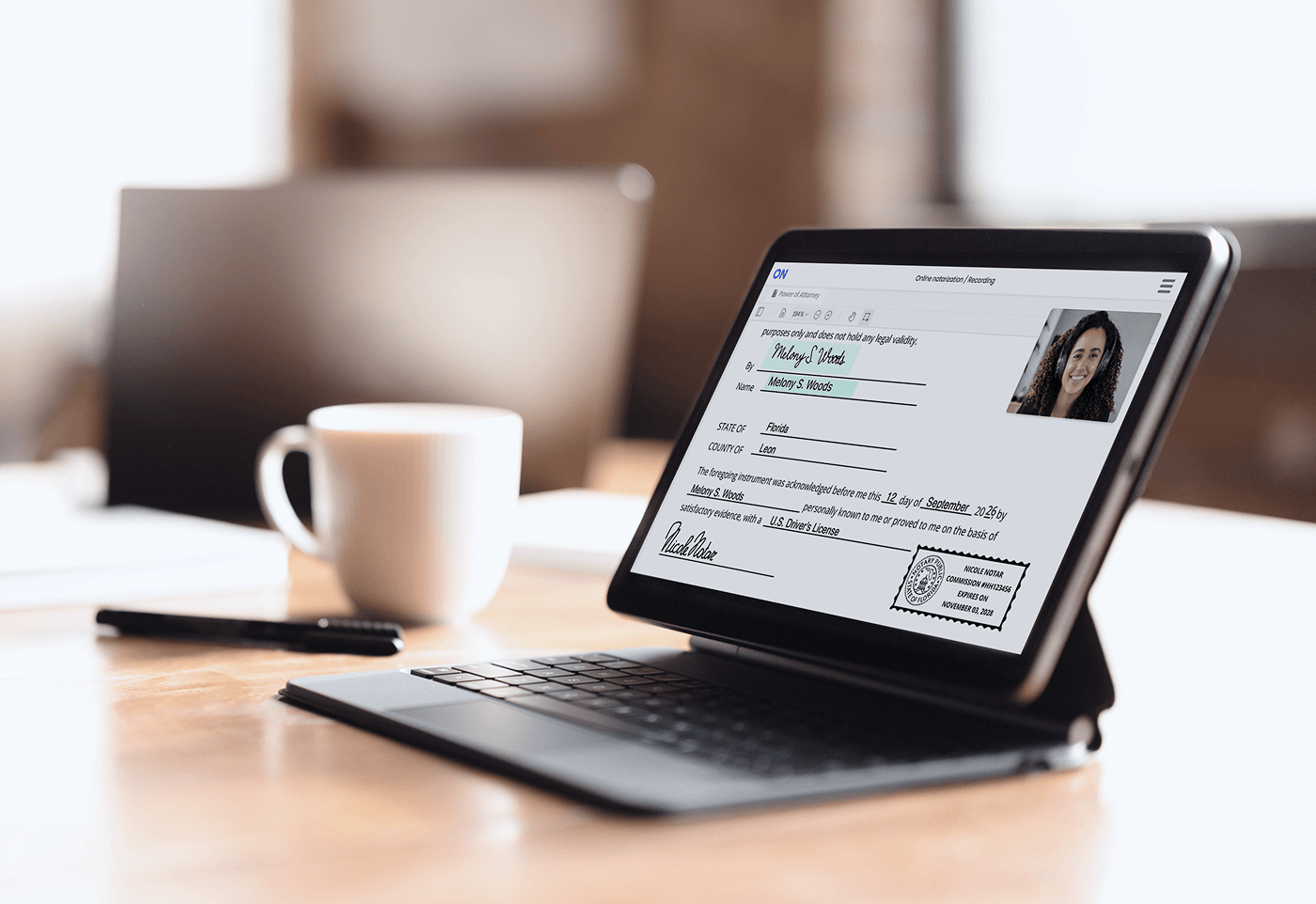
With RON, the seller signs and notarizes the deed, the closing disclosure, and the supporting affidavits from wherever they are stationed, over a secure video session. A 30-minute call replaces a cross-country trip. The closing stays on schedule, and the seller keeps control of their own signature instead of delegating it.
The Buyer Who Hasn’t Arrived Yet
Sellers aren’t the only ones closing remotely. A growing share of military buyers want to secure a home before they physically relocate — so they can move directly into their own house rather than burning months in temporary lodging or a short-term lease with a family in tow.
These buyers fall into two patterns. Some shop entirely remotely, relying on their agent for guided live video tours of each property, then make an offer and sign their closing documents before they ever set foot in the state. Others travel in for a focused house-hunting trip, choose a home, and then return to their current station — signing closing documents remotely once they’re back. Either way, the buyer needs a notary, and either way, that notary can’t reasonably be expected to be in the same room.
This is where the agent’s role expands. Brokerages serving relocating buyers increasingly act as the buyer’s eyes and hands on the ground — conducting live video walkthroughs so a buyer in another state can inspect a kitchen, a roofline, or a backyard in real time and ask questions as if they were standing there. The notarization then closes the loop: the buyer signs from home, and the keys are waiting when the moving truck arrives.
Why This Population Benefits Most
Military families face a specific stack of constraints that RON addresses directly. Orders dictate the timeline, not the housing market. Leave is limited and not guaranteed. Deployments and overseas postings can put a signer in a location with no convenient access to a U.S. notary at all. And the financial margin for a wasted trip is thin, especially for younger enlisted families.
For a brokerage like Homevets Realty, whose clients are overwhelmingly veterans, active-duty members, and military spouses, building a remote-friendly closing process isn’t a convenience — it’s a baseline requirement. The combination of live video property tours and remote online notarization means a service member can shop for, agree to buy, and legally close on a home in Central Texas without ever interrupting their orders.
A Few Practical Notes for Military Closings
RON works for most military real estate transactions, but a few details are worth confirming early:
- State authorization matters. Texas permits RON, but if a signer is physically located in a state or country with different rules, or the transaction crosses state lines, the more restrictive jurisdiction can govern. Confirm before scheduling.
- VA loans add a layer. Many military buyers finance with a VA loan. Most lenders now accept RON for closing documents, but VA-specific requirements should be verified with the lender before relying on a remote close.
- Identity verification is rigorous. RON platforms require government ID, knowledge-based authentication, and biometric matching — which can be a logistical consideration for a signer overseas, but is generally an asset rather than an obstacle.
- Coordinate the title company early. Confirm the title company’s underwriter accepts RON for the specific transaction type, especially when one party is abroad.
The Bigger Picture
The military relocation use case is, in many ways, the clearest argument for remote online notarization. It’s a population that genuinely cannot always be present, moving on a schedule they don’t set, often across borders. RON — paired with live video tours and a brokerage that understands the rhythm of military moves — lets these families buy and sell on the timeline their orders demand, not the one a notary’s calendar once dictated.
For brokerages serving this community, like Homevets Realty in the Fort Hood area, that capability has become central to how they serve clients who are, more often than not, somewhere else entirely.