

Why Most Wills Still Aren’t Self-Proving — and How Online Notarization Fixes That

Most Americans who take the time to create a will skip one step that saves their family weeks of delay after they die: making the will self-proving. A self-proving will is one that includes a notarized affidavit from the witnesses, so the probate court can accept it without tracking those witnesses down later. Without it, someone — often a grieving spouse or adult child — has to locate the original witnesses, get them to confirm their signatures, and hope they’re still alive and reachable. If they’re not, the court process gets slower and more expensive.

The reason most wills aren’t self-proving isn’t that people don’t want the protection. It’s that the step requires a notary, and by the time the will is signed and witnessed, nobody wants to schedule another appointment. The will is done. It feels finished. The notarization step gets put off, and then it never happens.
Remote online notarization removes that friction entirely, and it matters more for estate planning than most people realize.
What “self-proving” actually means in practice
When someone dies and their will goes to probate, the court needs to confirm the will is genuine. In most states, that means verifying that the witnesses actually watched the person sign it. If the will is not self-proving, the court may require the witnesses to appear in person or submit sworn statements — sometimes years after the signing, when memories have faded and people have moved.
A self-proving affidavit eliminates that step. The witnesses and the person making the will sign a notarized statement at the time of execution, and the court accepts the will on the strength of that notarized record. No witness hunt. No delays. The probate process starts cleanly.
Nearly every state offers a self-proving option. The specific requirements vary — some states build the affidavit into the signing ceremony, others allow it to be added afterward — but the core idea is the same everywhere: a notarized witness affidavit that tells the court this will is authentic.
Why does the notarization step get skipped
The pattern is remarkably consistent. A person sits down with an attorney, or uses an online service, or even writes a will by hand in a state that allows holographic wills. The will gets signed. The witnesses sign. Everyone feels a sense of accomplishment — the hard part is done.
Then someone mentions the self-proving affidavit. It requires a notary. That means scheduling an appointment, coordinating the witnesses’ availability again, and physically going somewhere. For a lot of people, that’s enough friction to push it to “later.” Later becomes never.
The result is a will that’s legally valid but not self-proving, which means the family inherits an avoidable administrative burden at exactly the worst possible time.
What changes when notarization goes online
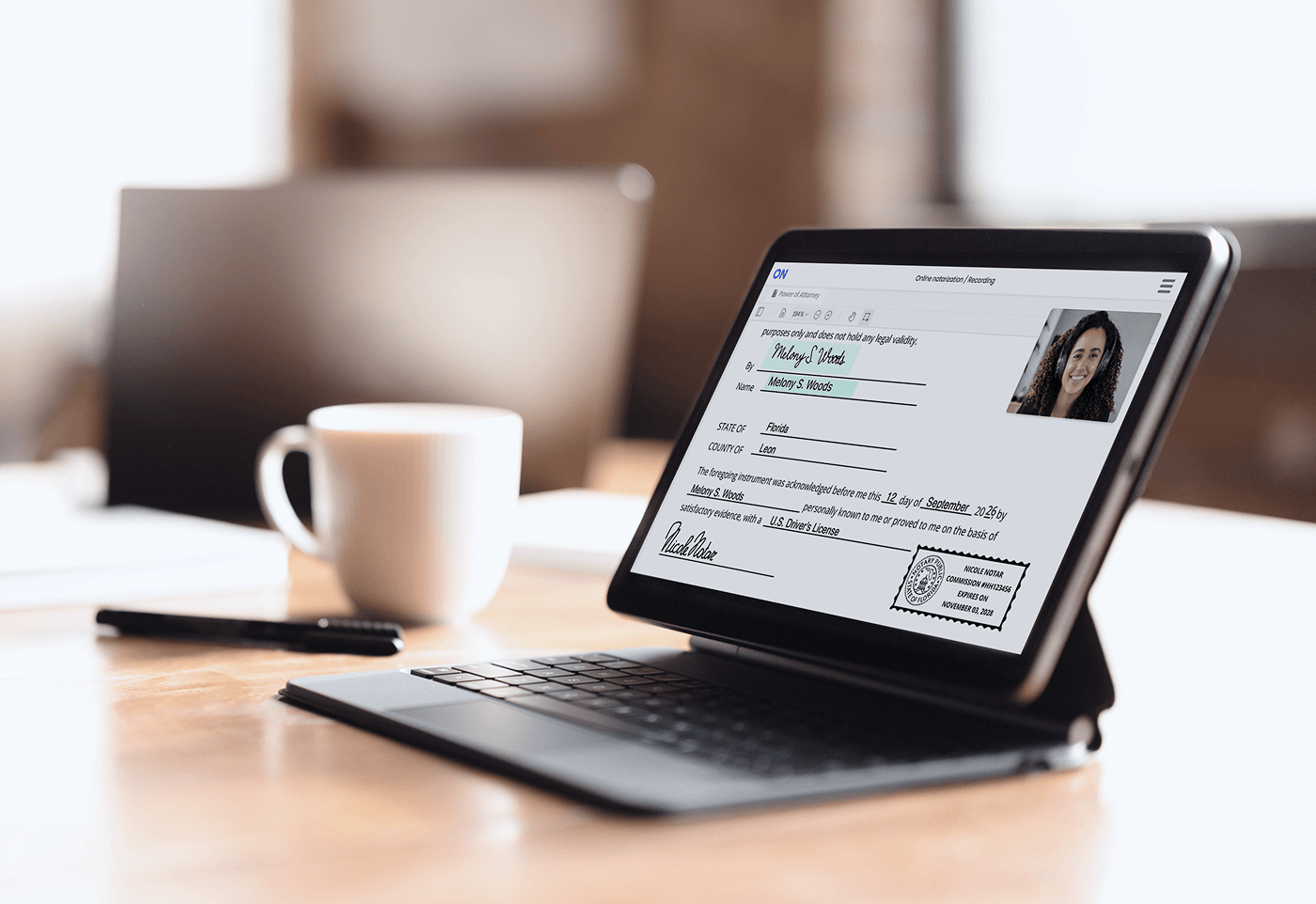
Remote online notarization compresses the self-proving step into the same session as the will signing — or makes it trivially easy to do afterward. Instead of coordinating schedules and driving to an office, the testator and witnesses join a secure video session, verify their identities, and sign the affidavit electronically in front of a commissioned notary. The entire process takes minutes, not days.
For people working with an attorney, the notarization can happen at the end of the same video call where the will is reviewed and signed. For people who signed their will months or years ago and never got around to the self-proving step, online notarization offers a way to close that gap without reassembling everyone in the same room.
This matters most in three situations that come up constantly in estate planning.
The out-of-state witness problem. Witnesses move. The college friend who witnessed your will in 2019 now lives three states away. Getting everyone physically together again for a notarized affidavit ranges from inconvenient to impossible. A remote session eliminates geography from the equation.
The elderly or mobility-limited testator. For older adults — the population most likely to need an updated will — traveling to a notary’s office can be a genuine hardship. Online notarization brings the notary to them, on their schedule, from their home.
The “I’ll do it later” problem. This is the most common one. The will exists, the witnesses signed, but the self-proving affidavit never happened because it required one more in-person step. When the barrier drops to a fifteen-minute video call that can be scheduled for tonight, “later” becomes “now.”
The state-by-state factor
Not every state treats online notarization of wills identically. Some states have adopted the Revised Uniform Law on Notarial Acts (RULONA) or passed their own remote online notarization statutes that explicitly cover estate documents. Others have more limited RON frameworks. A few states — Colorado is one example — have gone further and enacted electronic wills acts that allow the entire will to be created, signed, witnessed, and notarized online.
The critical thing for anyone making or updating a will is to confirm what their state allows before assuming online notarization will work for their specific document. A state-by-state guide to will requirements, like the one maintained at Wills Probate Guide, can help clarify whether your state requires witnesses, allows notarization as an alternative, and offers a self-proving option — the three questions that determine whether remote notarization fits your situation.
What this means for families
The practical impact is straightforward: fewer wills arrive at probate without the self-proving affidavit, and fewer families spend weeks chasing witnesses during one of the hardest periods of their lives.
Estate attorneys have known for decades that the self-proving step is the most-skipped part of will execution. The advice has always been the same — do it now, don’t put it off, you’ll thank yourself later. The problem was never the advice. It was the friction. Scheduling a notary, coordinating witnesses, and showing up in person created just enough resistance to stop people from finishing.
Online notarization doesn’t change the law. It doesn’t change what makes a will valid. What it changes is the last-mile logistics that kept a good idea from getting executed. For something as important as making sure your will holds up in court without a fight, removing that friction matters more than it sounds.
For anyone who has a signed will sitting in a drawer without a self-proving affidavit — and statistically, that’s most people who have a will at all — a remote notarization session is the single highest-value fifteen minutes you can spend on your estate plan this year.
About the author
Wills Probate Guide is an independent, plain-English estate planning resource covering wills, probate, trusts, and estate tax rules across all 50 states. The site provides state-specific guides with exact legal requirements, dollar figures, and official sources — written for families, not lawyers.